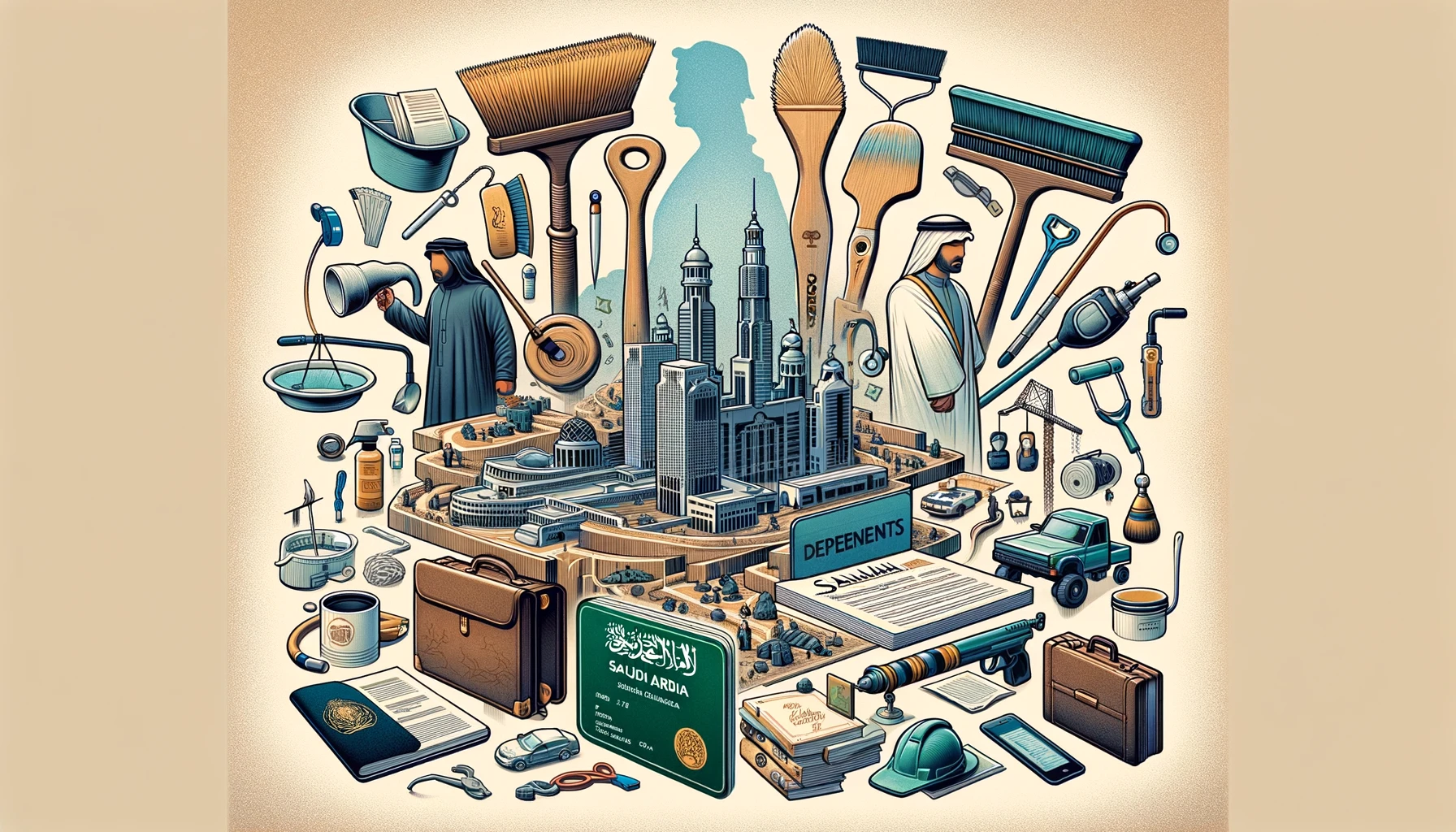
Approximately 10 million expatriates live in Saudi Arabia, wearing various types of Iqama. Many people are unaware that the type of Iqama affects their social class and their eligibility for certain benefits in Saudi Arabia.
Iqama for Domestic Workers
Saudis employ individuals with a domestic worker's Iqama as domestic servants, drivers, and building caretakers. Those with this type of Iqama can apply for a family visit visa. However, they cannot apply for a permanent family visa (iqama) for their relatives.
Working Class Iqama
The second type of Iqama in Saudi Arabia is that of the working class. These individuals are generally construction workers, cleaners, plumbers, and all manual laborers. Their employers pay for their health insurance cards. People with this type of Iqama can apply for a family visit visa, but cannot apply for a permanent family visa for their relatives.
Professional Class Iqama
The third type of Iqama in Saudi Arabia is the professional Iqama. Doctors, teachers, accountants, and engineers working in the private sector fall under this category. Individuals in this category are eligible to apply for a family visit visa and a permanent family visa for their families.
Individuals with this type of Iqama can easily apply for visas to other countries such as Thailand, Malaysia, the Philippines, Canada, the Schengen Area, the United States, or the United Kingdom. Their employers pay for their health insurance cards.
Iqama for dependents
The fourth type of Iqama in Saudi Arabia is the Iqama for dependents. Those in this category include housewives, children of expatriate workers, and their parents.
Expatriates must pay a fee to renew their Iqama. Normally, the employer pays for their health insurance cards. However, if the contract does not cover them, the expatriate must renew the health insurance cards for their dependents themselves.
Iqama for Government Employees
People working in the government sector have a government employee Iqama. They are also entitled to free treatment in Saudi Arabian government hospitals. Furthermore, they are exempt from the dependency tax, which is a significant benefit.
Iqama for Businessmen
Expatriates who invest in Saudi Arabia by registering their companies obtain an investor's Iqama. These expatriates are also entitled to numerous benefits. However, they are not permitted to work for anyone other than themselves.
Iqama Privileged Special
The Saudi Arabian government recently launched this type of Iqama, which grants you numerous rights and benefits. You must pay 100,000 SR annually, or a one-time payment of 800,000 SR, to obtain this special privileged Iqama, also known as a green card.
The good thing about this type of Iqama is that they don't have to pay the expenses of those dependent on you. Furthermore, you will have the same rights as Saudi citizens.
To get all the latest news, please join our Telegram group. CLICK HERE